30th Anniversary of Kutná Hora’s Inscription on the UNESCO World Heritage List
Silver medal
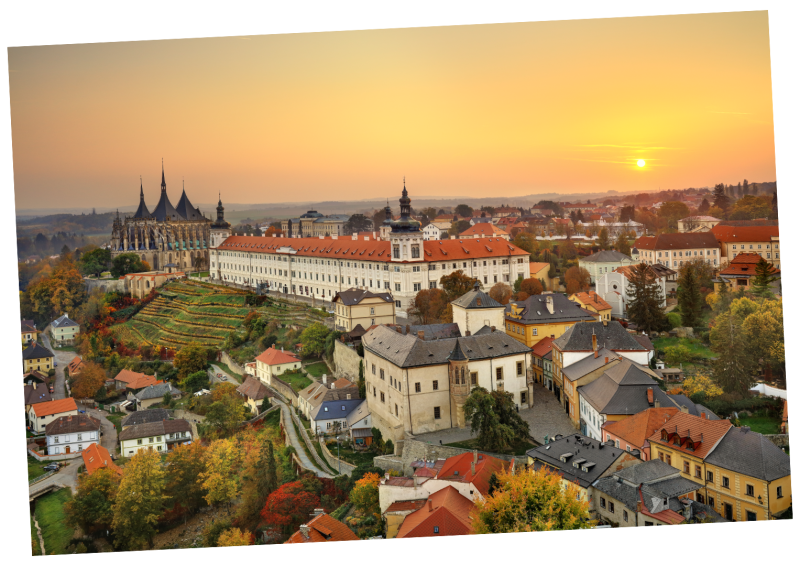
Kutná Hora was inscribed on the UNESCO World Heritage List in 1995. As the name of the town suggests, it was associated with mining, or more precisely with the mining of silver and silver ore. Silver veins were probably already known at the end of the 10th century. News of the silver riches spread very quickly, and soon dwellings began to spring up around the individual mines.
At that time, mining settlements had virtually no rights, so legal matters fell under the jurisdiction of towns such as Čáslav and Kolín. These settlements were named "Mons" or "Hora" in Latin, and it was not until 1289 that the Latin name "Mons Cuthna" or "Kutná Hora" can be found. In 1300, King Wenceslas II (1271–1305) issued the Ius Regale Montanorum, or Royal Mining Code.
In the same year, the central mint of the Czech state was also moved to Kutná Hora, where, under the guidance of Italian experts from Florence, the Prague groschen began to be minted in the Italian Court. During the First Republic (1918–1938), Kutná Hora was a destination for tourists seeking to explore its historical monuments and learn about its history. The historic center of the urban conservation area, together with St. Barbara's Cathedral and the Church of the Assumption of the Virgin Mary in Sedlec, has been listed as a UNESCO World Heritage Site since 1995.
Experience something extraordinary for yourself and witness an unprecedented event as reconstruction takes place right before your eyes in the unique ossuary beneath the Church of All Saints in the cemetery in Sedlec near Kutná Hora. Take advantage of this unique opportunity to look over the shoulders of restorers as they carry out their irreplaceable work through a stained glass window.
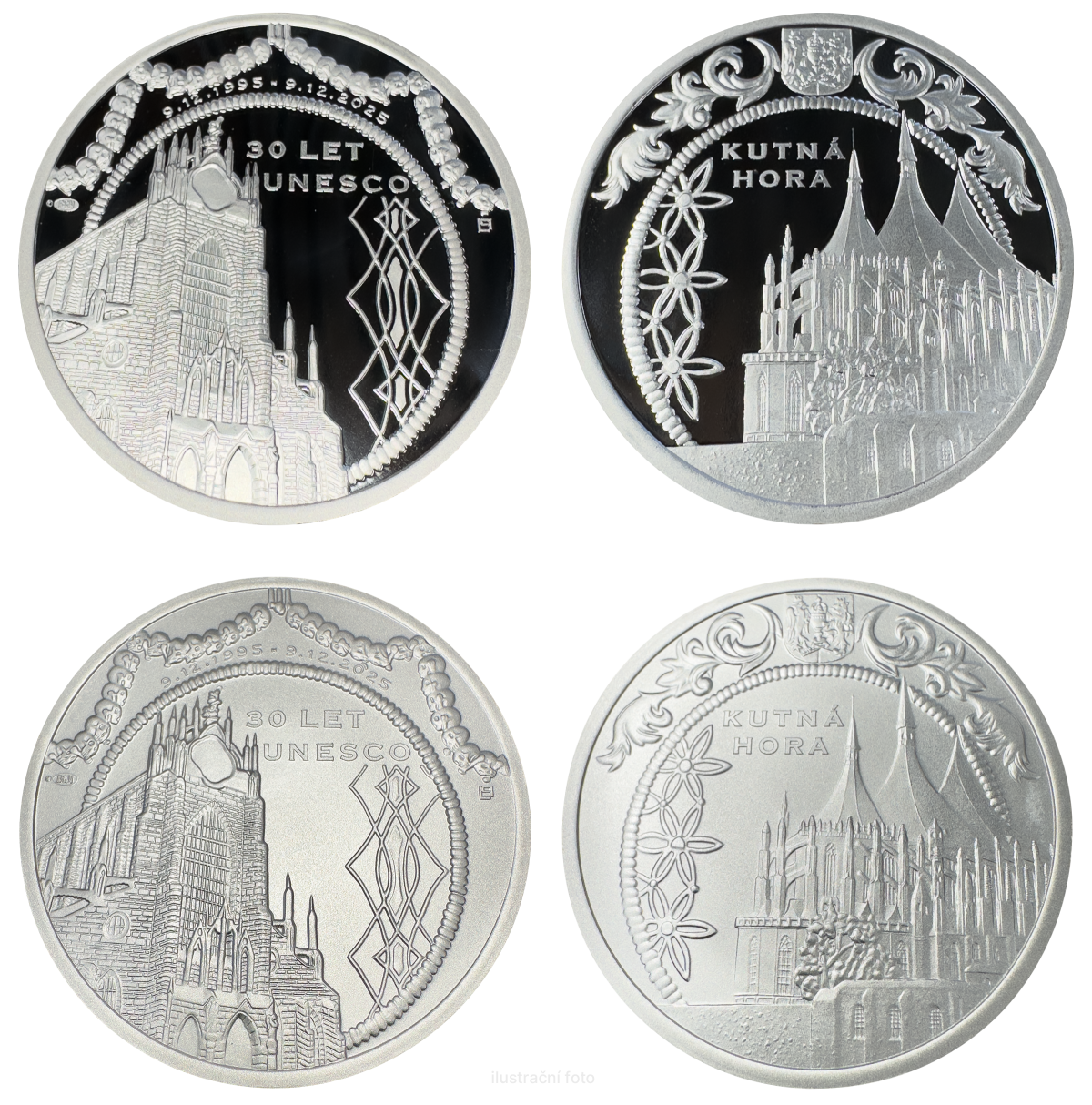
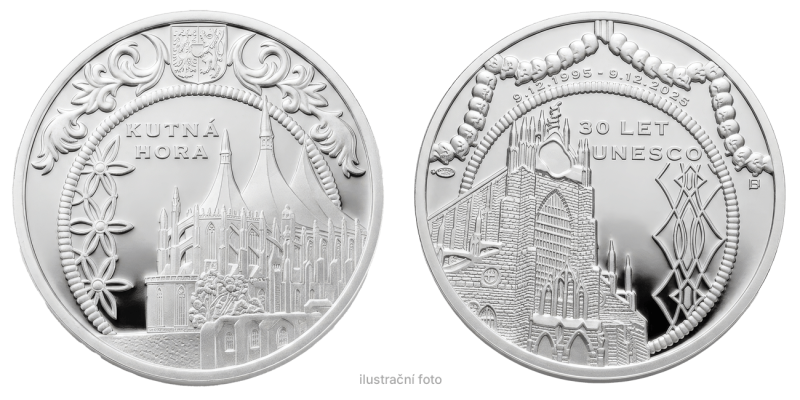
Proof design
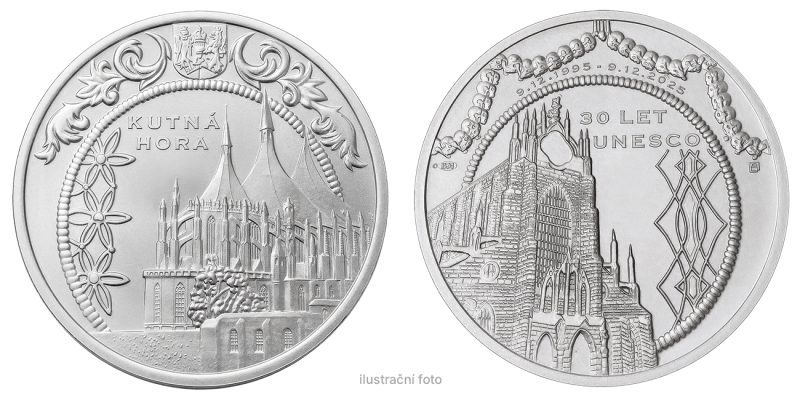
Standard design
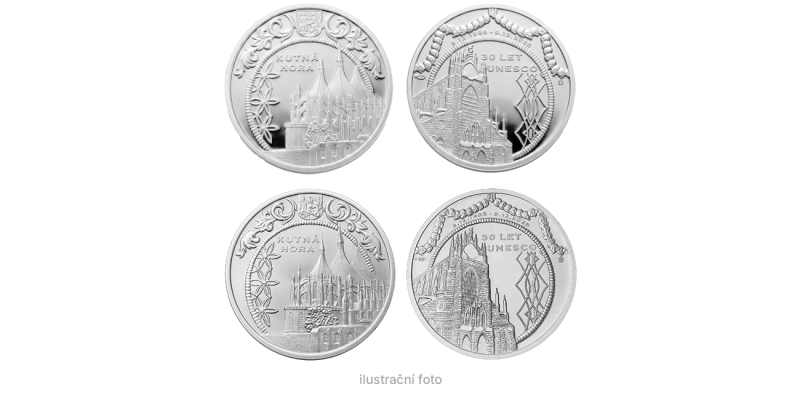
Set
| Author | Lukáš Preisler, DiS. |
| Numbered issue | Numbered medals in a set + Numbered certificate |
| Material | Silver Ag 999 |
| Weight of set | 311 g (in set 2 x 311g) |
| Diameter | 70 mm |
| Design | Standard / Proof / Set - Standard + Proof |
| Edge | Smooth |
| Emission | 100 pieces Proof / 100 pieces Standard |
| Production run of sets | 50 pieces (Proof + Standard) |
| Year of issue | 2025 |
| Mint | BESSERGOLD Mint s.r.o. |
Experts have a difficult task ahead of them: they must dismantle and reassemble up to 60,000 skulls and approximately 450,000 long bones. This unique reconstruction has been underway since 2014 and is scheduled for completion in 2030. The first pyramid made of human bones has already been restored, and others are eagerly awaiting their turn. cAn unprecedented and curious find was a music newspaper from 1972, discovered inside the second of the dismantled pyramids.
